On this page
- What is a voxel game?
- From a whole planet to one voxel
- Voxel vs blocks vs polygons: what's the difference?
- Dig, carve, build: what voxels change when you play
- Why a voxel world can be a whole planet
- Even the characters are voxels
- What was the first voxel game?
- The kinds of voxel games
- What Openworld adds to the genre
- Questions
What is a voxel game?
Take a pixel — one coloured square of your screen — and give it depth. You get a voxel, short for volume pixel: a little cube with a single colour, sitting on a three-dimensional grid. A picture is a grid of pixels; a voxel world is a grid of voxels, stacked in every direction, inside the hills as much as on their surface.
A voxel game is a game whose world is stored that way. The ground isn't a painted shell with nothing behind it: under the grass there is dirt, under the dirt there is stone, and every cube of it can be taken away or put back. That's the whole point of the genre. You don't just walk through the landscape — you dig it, carve it and build it.
Openworld is a voxel sandbox on a whole, round planet — walk straight and you come back to where you started — under a real sky with Moon phases and eclipses, all the way to the Sun, by way of the Moon and the planets. On Mac (native Apple Silicon), Windows and Linux. And its voxels are small: here's how small.
From a whole planet to one voxel
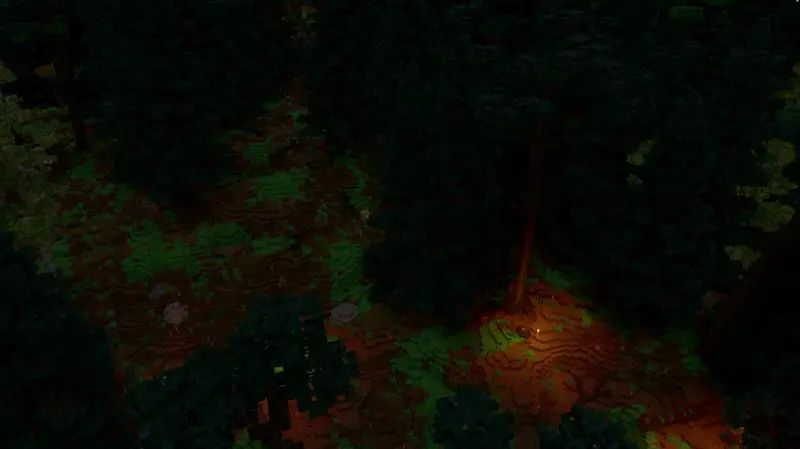
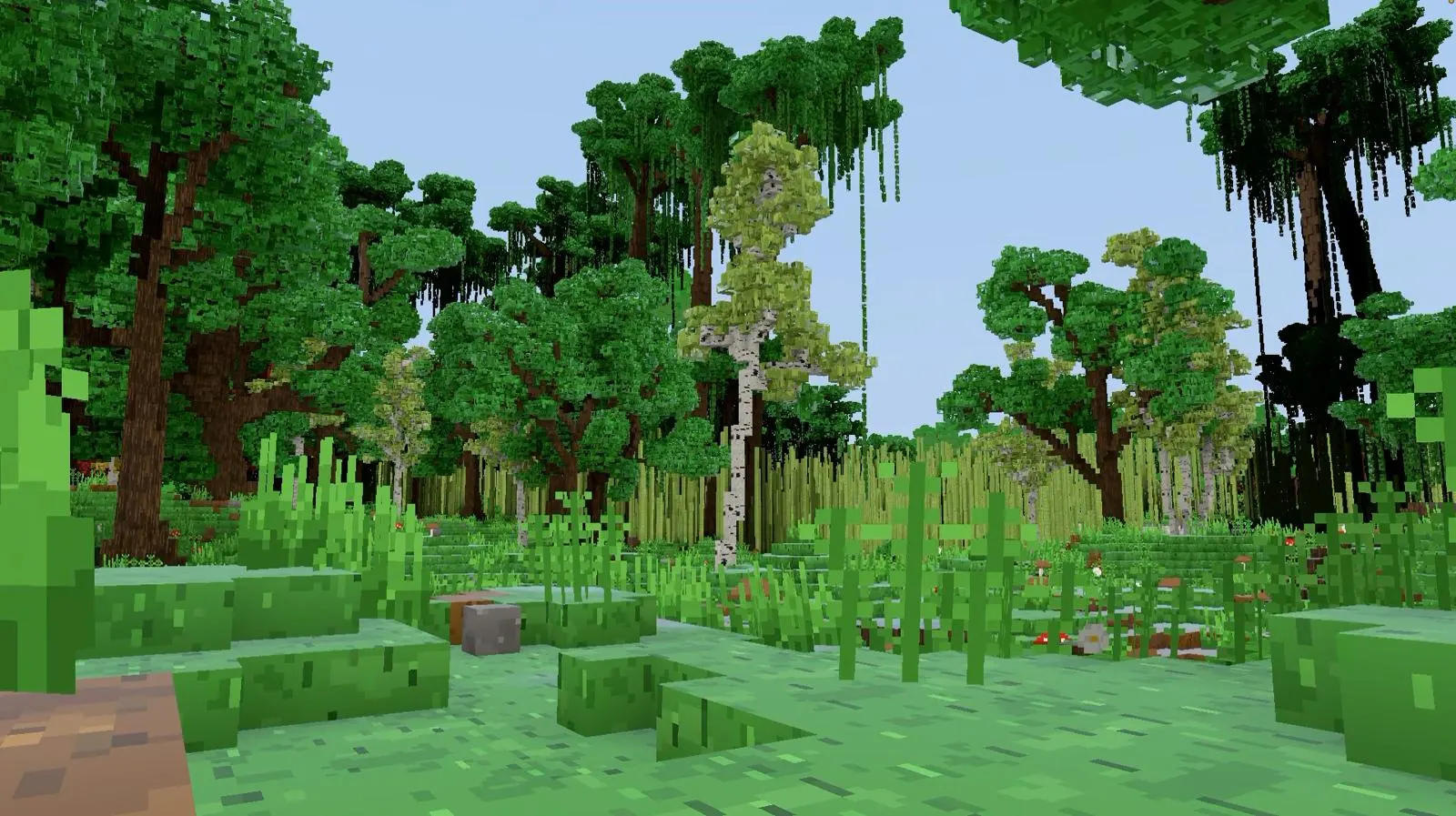
Scroll slowly: the camera leaves space, lands on one column of the world, and stops next to a player and a single block. Everything you see is made of the game's real resolution.
The planet
A whole round world, 1,000 km in radiusWalk straight ahead long enough and you come back to where you started.
One column
16 × 16 m of ground, 512 m tallGenerated once from the world's seed, then saved: what you dig stays dug.
A player
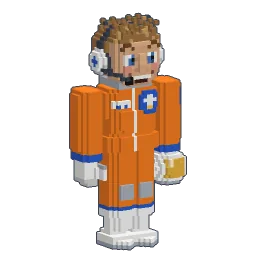
About 1.8 m: seven voxels highEvery character is a voxel model too, with its own finer grid.
A block
1 m = 4 × 4 × 4 = 64 voxelsThe building grid: one block, one meter.
A voxel
25 cm, the size of a brickThe smallest piece of matter in the world. This is what you dig, carve and lay.
- 25 cmone voxel, the resolution of matter
- 64voxels in one 1 m block
- 8.4 Mvoxels in one 16 × 16 × 512 m column
- 1,000 kmthe planet's radius
Voxel vs blocks vs polygons: what's the difference?
The three words get mixed up all the time. Here's the short version:
- Polygons are how almost every 3D game draws things: thin triangles wrapped around a shape. A polygon mountain is hollow; you can't dig into it unless the game fakes a hole.
- Voxels are how a world can be stored: a solid 3D grid, filled inside. Dig, and the game knows what's under your feet.
- Blocks are a gameplay grid. In many block games a block is 1 m wide and it is also the smallest thing you can change. In Openworld the building grid is 1 m too, but each block is made of 64 voxels, so you can take or lay a quarter of a metre at a time.
A world of 1 m blocks
- The smallest change is a 1 m cube
- A wall is at least 1 m thick
- A roof is a staircase of big steps
Openworld, 25 cm voxels
- The smallest change is a 25 cm voxel
- Building pieces still snap to a 1 m grid
- Thin walls, 25 cm half slabs, carved details
Most voxel games still draw their cubes with polygons on your graphics card: storage and drawing are two different jobs. What makes a game “voxel” is that its world is a grid of matter you can change, everywhere.
Dig, carve, build: what voxels change when you play
Small voxels matter the moment you hold a tool. In Openworld each tool has its own grip on the world:
- The pickaxe breaks the aligned 1 m cube in front of you (4 × 4 × 4 voxels): rock, ores and ice. The shovel does the same with soil, sand and snow, the axe with wood, the shears with leaves.
- The chisel — or your bare hand — takes one voxel at a time. That's how you carve a window, a step, a face in a cliff.
- Raw material in your hand is laid one voxel at a time, against the face you aim at.
- Building pieces snap to the 1 m grid: cubes, 50 cm pillars, slabs, half slabs only 25 cm thick, vertical slabs, stairs that turn corners, walls, fences, doors. Crouch and a piece goes only where its voxels are free; crouch to break one, and it comes apart voxel by voxel.
The result: you can build a house at the scale of a house, with real window sills and thin roofs, not a box of one-metre bricks. The full tour is in building voxel by voxel.
Why a voxel world can be a whole planet
Most voxel sandboxes are a flat map that goes on and on. Openworld chose the opposite: a whole round planet, 1,000 km in radius — about 6,280 km around. To make that possible with 25 cm voxels, the world is cut into columns of 16 × 16 m, each 512 m tall, and only the ones near players are ever generated. One column is already 8.4 million voxels; the planet has room for about 49 billion columns.
Each column is generated from the world's seed — the same seed always gives exactly the same voxels — then saved the first time it exists. Dig a tunnel, leave for a week, come back: it's still there. When you create a world you choose its layout: scattered biomes, close to each other, or giant continents separated by real oceans.
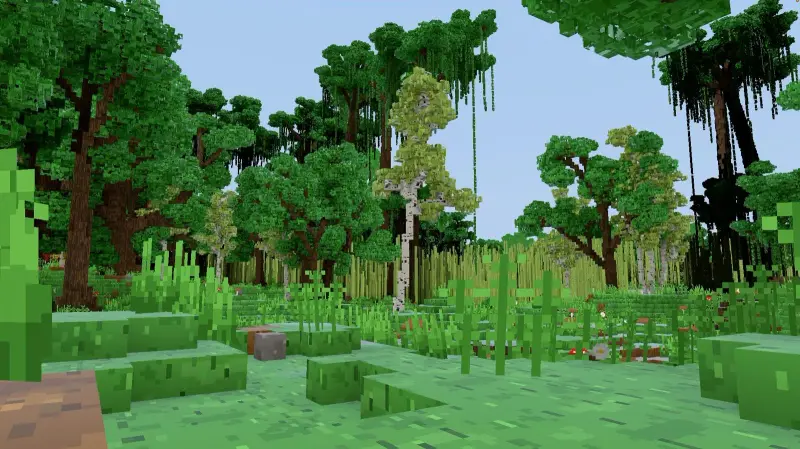
A round planet also gives you a real sky. A day lasts 25 minutes; the Sun, the Moon and the stars move across it, with phases and eclipses. And because the planet is round, you can really go around it. Near you, the ground is unrolled flat, so building works exactly as on a flat map; the distant terrain, out to 10 km, is laid on the sphere with its true curvature, and from high enough you see the horizon curve. How cubes fit on a sphere is the whole subject of our guide to a voxel planet you can walk around.
Even the characters are voxels
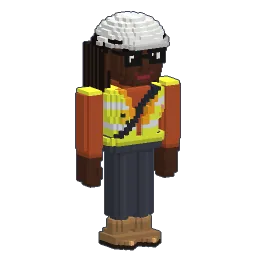
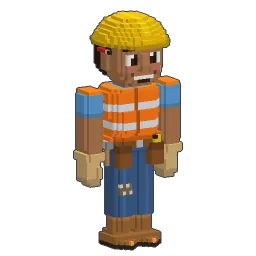
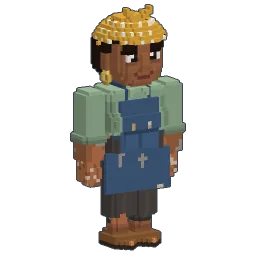
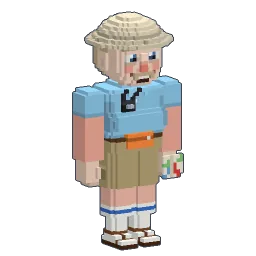
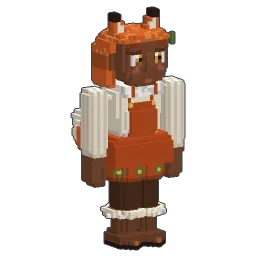
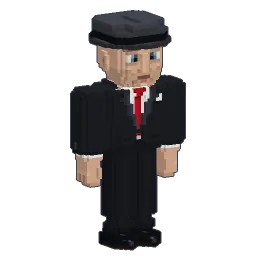
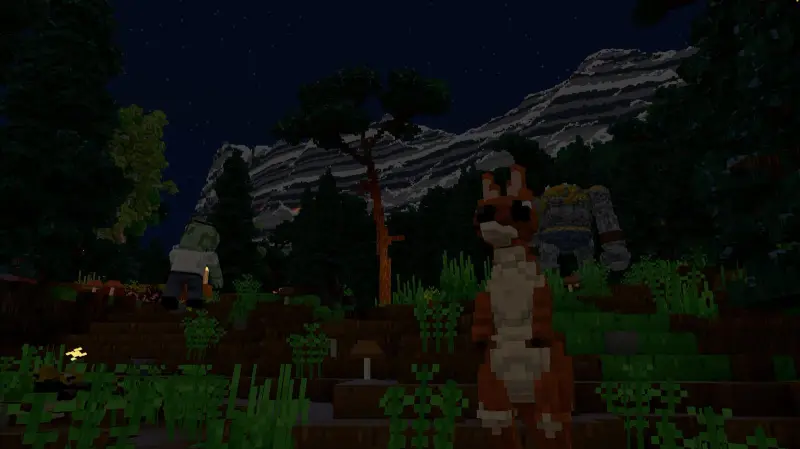
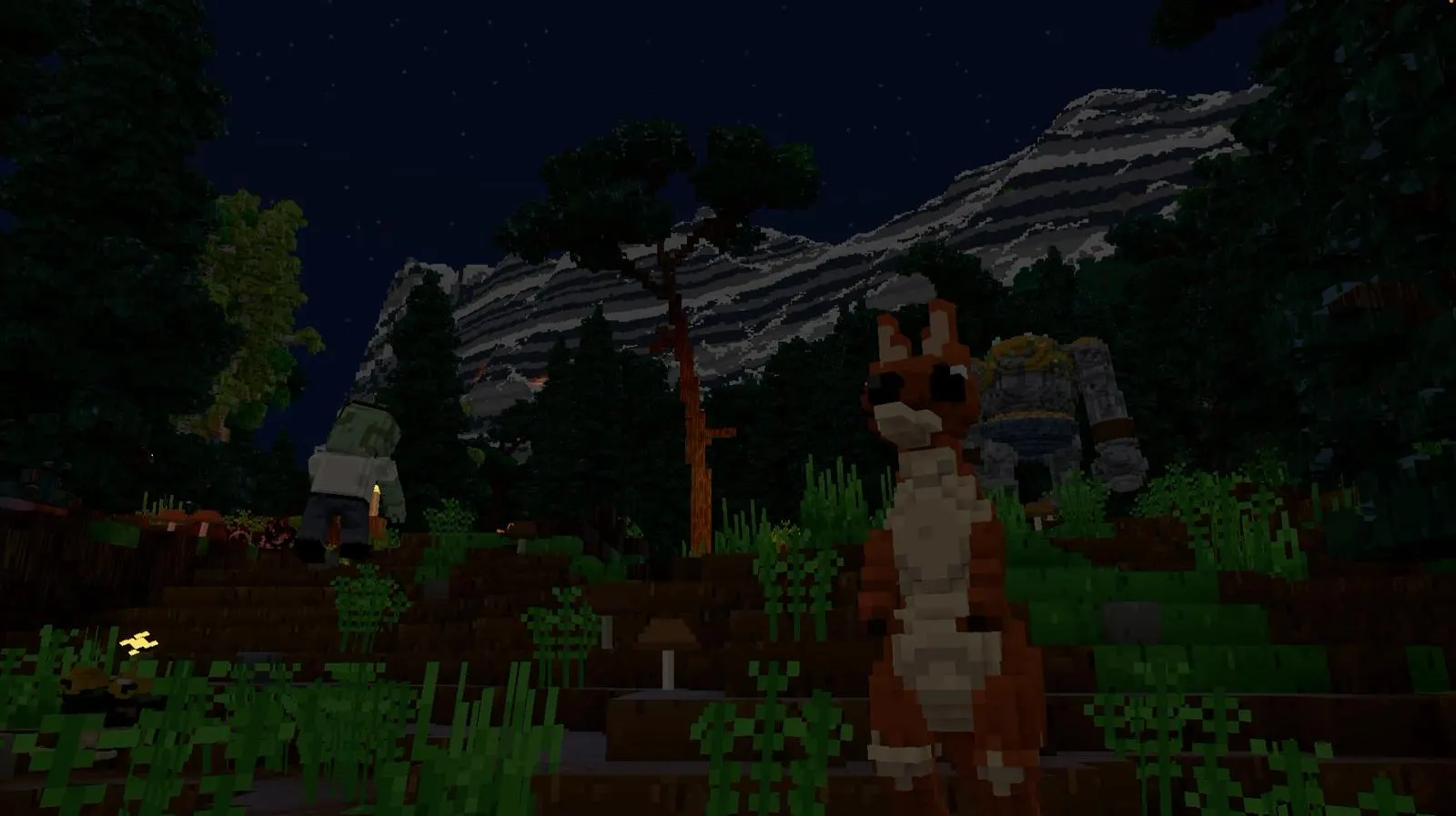
Players and creatures in Openworld are voxel models too, on a finer grid: a skin voxel is about 3 cm, eight times smaller than a world voxel. That's enough for a nose that sticks out, a braid, fox ears or a crown. The game comes with 202 ready-made skins and an editor where you paint and sculpt your own, voxel by voxel — see the guide to voxel skins.
What was the first voxel game?
Voxels arrived in games long before block sandboxes. In the early 1990s, a flight game used a “Voxel Space” engine that drew rolling hills from columns of height and colour, at a time when polygons looked flat and angular. A few years later, an adventure game used voxels for its landscapes too.
The idea of a world you can change everywhere came later. In the late 2000s, a small mining game showed that a grid of cubes you dig and place is fun in itself, and the genre became a phenomenon with one-metre blocks. Since then voxel games have gone in every direction: tiny 10 cm voxels you can blow up in destruction games, voxel planets and asteroids in engineering games, open-source block engines.
The kinds of voxel games
A short, honest map of the genre — each family does something different:
- Block sandboxes — one-metre blocks, usually a flat world that goes on and on, a huge community of builders.
- Open-source block engines — many small games built on one engine, running almost anywhere.
- Voxel RPGs — a large world to explore together, with classes and quests.
- Destruction games — tiny voxels and physics: everything breaks. Heists and demolition, not survival.
- Slow survival games — demanding, with chiseling inside blocks.
- Openworld — a voxel sandbox at 25 cm on a whole round planet, with caves, creatures, a real sky and rockets to the Moon. In alpha.
Looking for the wider genre? We map it in voxel sandbox games: build, automate, fly to the Moon.
What Openworld adds to the genre
What Openworld adds is the planet: a round world with a day and night cycle, Moon phases and eclipses, oceans, giant ore deposits, caves, creatures, and a sky you can leave in a rocket you build yourself. Play alone, open your world to your LAN, or play with friends on a server.
Openworld is made by one independent developer. It runs on Mac (Apple Silicon and Intel), Windows and Linux — see how to install it on a Mac, on a Windows PC or on Linux. You need an Openworld account; your first nights are covered in the beginner guide.
Follow Openworld
@play_openworld is Openworld's official Instagram page: videos of the game and news of every update.
@play_openworldOpenworld is created by @tompascard
Three steps to your voxel planet
- 1Install Openworld with the downloaded file: it sets up the launcher.
- 2Create your account in the launcher and confirm your email.
- 3Pick your username… and play.
Openworld is played on a computer: Mac, Windows or Linux. Send yourself the link, we'll be waiting on the other side.
Questions
What does voxel stand for?
Voxel is short for “volume pixel” (sometimes “volumetric pixel”): a small cube of one colour on a 3D grid, the way a pixel is a square on a 2D grid.
Are voxel games only cubes?
The grid is made of cubes, but the smaller they are, the less you see them. Some engines even smooth them into round shapes. In Openworld a voxel is 25 cm, so slopes, roofs and sculpted details look much finer than with 1 m blocks.
How big is a voxel in Openworld?
25 cm on each side. A 1 m block is 4 × 4 × 4 = 64 voxels. Characters use a finer grid: a skin voxel is about 3 cm.
What kinds of voxel games are there?
Block sandboxes, open-source block engines, voxel RPGs, destruction games and slow survival games, among others. Openworld is a voxel sandbox with a whole round planet, a real sky and the Moon.
Is Openworld a voxel game?
Yes. Its whole world is made of 25 cm voxels you can dig, carve and build, on a round planet 1,000 km in radius. It's a voxel sandbox for Mac, Windows and Linux.
Can I play Openworld on a Mac?
Yes, natively on Apple Silicon and on Intel Macs (macOS 11 or newer), as well as on Windows 10 and 11 and Linux. Download the game.