On this page
Where to find resources in Openworld: read the ground
Openworld is a voxel sandbox on a whole, round planet, for Mac (native Apple Silicon), Windows and Linux. Its underground is no random backdrop: every resource has a depth band, a preferred landscape and, for the big deposits, a sign at the surface. Learn the signs and you stop digging blind:
- A giant oil field: a ragged patch of black bitumen, 1 to 3 m wide, flush with the lowland ground.
- A small oil lens: nothing at the surface. Dig until you meet bitumen or dark shale, or follow a black pillar in a cave.
- Coal and iron: dark specks and pale grains on every cave wall.
- A giant ore lode: boulders of ore, 2 to 4 m high, standing on the ground above its core.
- A geode: a hollow sphere of glowing crystals.
- On the Moon: helium-3 and titanium in the dark seas, ice at the poles.
How to find oil
Oil is the resource with the most rules, and the one that matters most later: kerosene, natural gas, plastic and tar all come from it. It gives itself away in two ways.
Giant oil fields: follow the black seeps
A giant field is a lens of oil about 120 m wide and 12 m thick, its top some 30 m down, beneath the lowlands: plains and gentle land away from the mountains. The Earth has nine: one between 250 m and 1.5 km from your starting point, eight around the planet.
No need to dig blind. Three to five thin conduits of oil climb from the lens all the way to the surface. Each comes out under a cap of bitumen, a dark tar rock, flush with the ground, inside a ragged black patch 1 to 3 m wide: a bitumen seep. Dig through the cap and follow the pipe of oil, about 0.75 m across, straight down. Expect several patches within a few dozen meters. This is the place to build a real refinery.
Small lenses: found by digging
Most oil sleeps in small lenses: 20 to 60 m wide, 6 to 16 m thick, centered 20 to 60 m under the ground, trapped under a cap of dark shale. About 18 % of the 160 m squares of land hold one, more on dry land and mesas. Look under deserts, plains and plateaus; never under volcanic provinces or high mountains.
Nothing shows at the surface, but two or three thin conduits climb from each lens and stop 2 to 8 m under the ground, in a stain of bitumen. Dig a shaft: when your pickaxe meets bitumen or dark shale, the oil is below. A small lens gives your first plastic and kerosene, not a big factory.
In caves: black pillars of bitumen
Where a conduit crosses a cave, its lining is bitumen instead of shale: a black pillar stands between floor and ceiling. Follow it down to the lens, torches in hand — the caves guide says what else lives there.
The air pocket on top of every lens
Oil never fills its lens to the roof: a little air sits on top, over a flat oil surface — easy to see in spectator mode.
How to find oil, step by step
- 1
Choose your land
Giant fields: gentle lowlands. Small lenses: deserts, plains, plateaus. Skip volcanoes and high mountains.
- 2
Look for black patches
Walk the lowlands watching the ground: a ragged black patch marks a giant field. The nearest lies within 1.5 km of your start.
- 3
Or go underground
In a cave, a black pillar means a conduit. No cave? Dig a shaft: bitumen or dark shale means oil below.
- 4
Follow the pipe down
Dig through the cap and follow the conduit: some 30 m down to a giant field, 20 to 60 m to a small lens.
- 5
Bring a bucket
A bucket (three iron ingots) lifts one cubic meter at a time. For more, a pump turned by a shaft, and a pipe to a tank.
- 6
Mark the spot
Place a torch, or light the bitumen: you will want to come back.
The eternal flame: a beacon over your oil
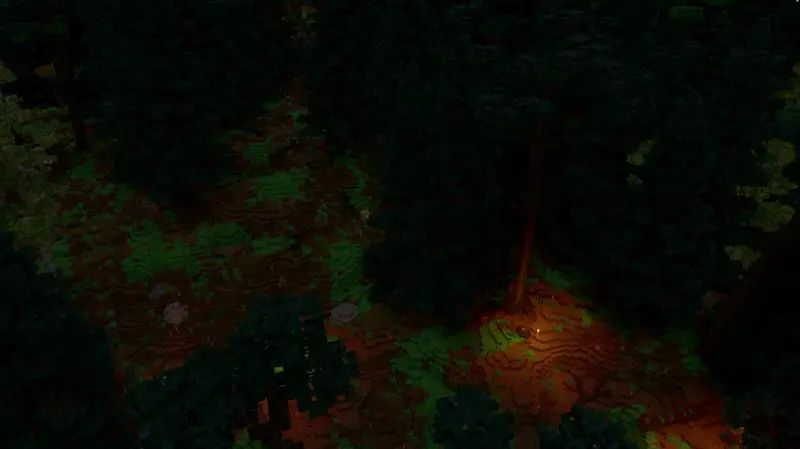
Bitumen burns. Right-click a bitumen block with a torch in hand and it catches fire, with the bitumen around it in the same meter of ground — and it never goes out. The orange flame, one meter tall, lights 10 m around: at night you see it from afar, a beacon over your oil.
Lava lights bitumen too. Water puts it out, and a burning block you dig gives plain bitumen back. Careful: stand in the flame and you catch fire, losing 5 health points a second until it dies down — or you plunge into water.
What oil is for
Scoop oil with a bucket or pump it, and it burns as it is: 20 seconds per cubic meter in a fuel slot. Its real value is in the refinery, a copper column over a steel firebox. Each cubic meter gives kerosene (the rockets' RP-1, once poured into a dewar), petrol and diesel, natural gas (liquid methane for methalox rockets, at the gas plant) and tar — and, on another setting, plastic. Bitumen itself is a fuel, a third longer than coal (80 seconds per cubic meter), and 16 voxels of it give two tar at the crafting grid.
Plastic is the one that matters. Circuit boards are laminated on it, lithium batteries and logic parts are built with it, the large power cable is sheathed in it, and every computer, console and rocket part needs circuit boards. The pumps and the refinery at work are in what oil is for in a factory.
Mining guide: where to find iron, gold, gems and the rest, by depth
Ore lies in veins, strings of pockets in the rock within 200 m of the surface. Each ore has its depth band, in meters under the ground, and some prefer a particular land. Coal and iron are the commonest, gems and uranium the rarest. The twelve ores of the Earth, from the surface down, and the rare raisonite:
Near the surface (from 3 to 10 m)
- Coal: 3–70 m — your torches, your fuel and the Furnace's reducer.
- Bauxite: 3–30 m, three times as common under the tropics.
- Saltpetre: 3–40 m, three times as common under hot deserts.
- Flint: 3–60 m, and in gravel.
- Sulfur: 5–80 m, three times as common in volcanic provinces.
- Copper: 8–90 m, more common under highlands.
- Iron: 10–140 m — tools, armor, buckets and every machine.
Mid-depth (20 to 35 m)
- Lithium: 20–120 m, more common under highlands.
- Raisonite: rare violet pockets of 1 to 3 cubes, 35–110 m, for the first alloy. An iron pickaxe or better.
Deep (70 to 200 m)
- Gold: 70–200 m.
- Titanium: 90–200 m, three times as common in volcanic provinces.
- Gems: 100–200 m, more common under mountains. The diamond is cut out of gem ore.
- Uranium: 120–200 m.
- 12kinds of ore in the Earth's veins
- 200meters of ground, down to the bedrock
- 89giant lodes on the Earth
- 9giant oil fields among them
Coal and iron in your first hour
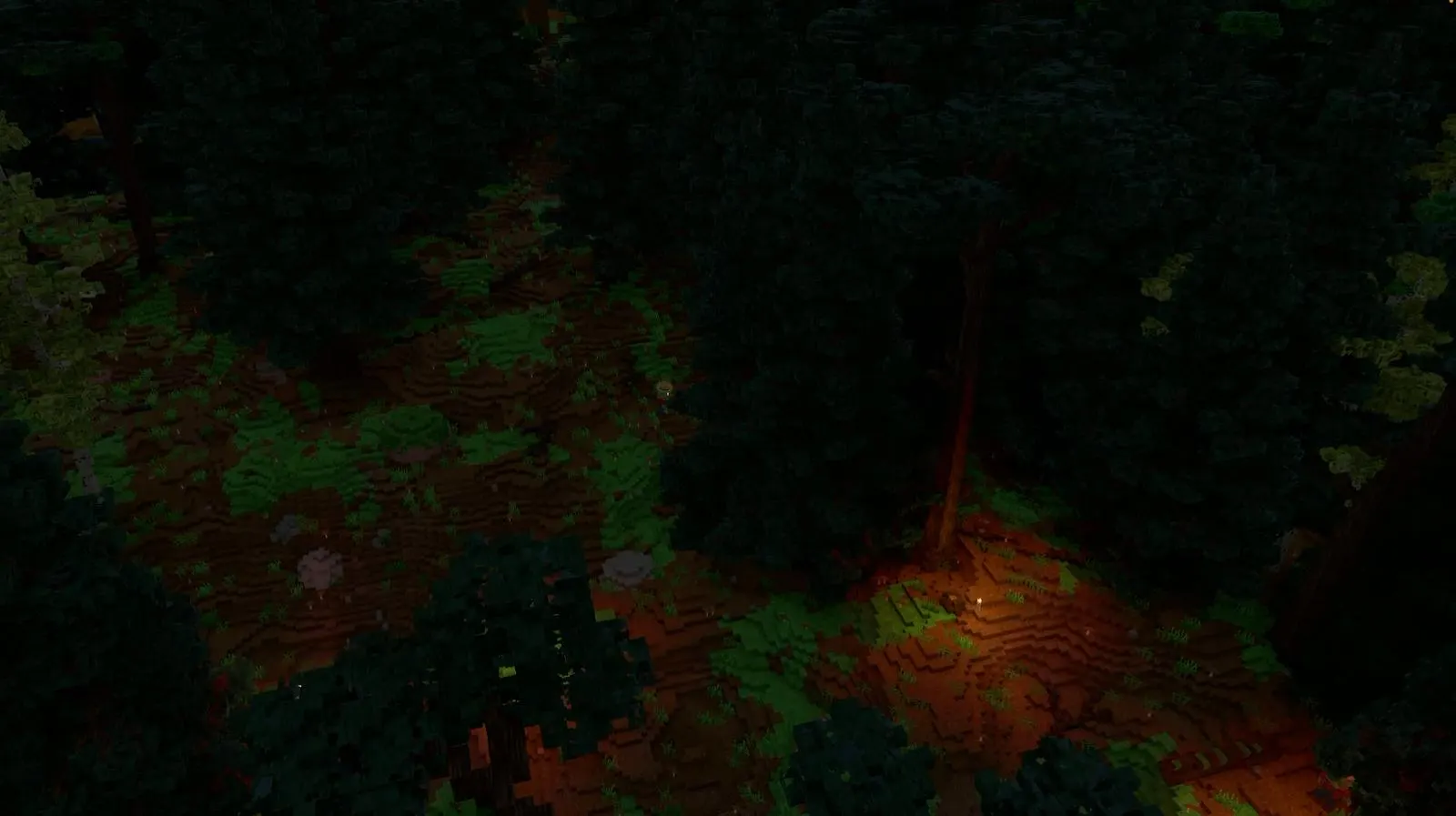
You don't need a depth table to start. The first 48 m under the ground hold a denser network of small coal and iron veins: almost one 6 m cube of rock in two has one, so every cave wall shows some. A full iron armor fits in two or three iron veins. Enter any cave with torches and follow the dark specks (coal) and pale grains (iron): that is why your first nights go better underground, and why the ores of your armor are never far.
Giant lodes: the signs and where to look
Every world also hides giant lodes: ellipsoids of ore 40 to 120 m wide, pure ore at the core, their top a few meters to 30 m under the ground. The Earth has about ninety. The first coal, iron, copper and bauxite lodes lie between 250 and 700 m from your starting point, the second of coal, iron and copper a little farther, and one of every other kind within 1.5 km.
To spot an ore lode, look for boulders of ore, 2 to 4 m high, standing on the ground above its core: you see them from afar. Dig in the middle, where the ore is pure. Each ore also has a favorite landscape:
- Coal and oil: the lowlands, away from the ranges.
- Iron and uranium: far inland, in the heart of the continents.
- Copper and gems: under the mountain ranges.
- Gold: at the foot of the ranges.
- Titanium: along the coasts.
- Lithium: hot, dry, flat land. Bauxite: the tropics. Saltpetre: the deserts.
Geodes, groundwater and lava
Geodes sit 20 to 160 m down, in one 90 m square of land out of four: hollow spheres 4 to 9 m across, their calcite shell lined with glowing crystal (over half), quartz (a fifth) and gems (6 %). Their cold light reaches 5 m: a landmark in the dark.
Aquifers are flooded caves: lenses of groundwater 20 to 52 m wide, 12 to 80 m down, more frequent under humid climates. A bucket scoops the water, a pump draws it; in a flooded cave you hold your breath 15 seconds before drowning.
Lava lakes fill domed chambers rimmed with obsidian, magma rock and basalt. Their floor lies 6 to 30 m above the bedrock, at least 40 m under the surface, in one 220 m square of land out of five — one in two in volcanic provinces. Lava lights 12 m around, and a cubic meter burns 100 seconds in a fuel slot, against 15 for coal. Never swim in it: see how not to die in lava.
Resources on the Moon
The Moon has its own table: titanium only 2 to 60 m down, and ilmenite under the dark seas (two titanium ingots for half the coal); meteoric iron under the crater walls (steel without coal); bauxite in the highlands; copper in the walls of the labyrinths; quartz and gems in the crystal groves; helium-3, a fuel four times longer than coal; and ice in mass near the poles, which a gas plant turns into rocket propellant. Every kind also has giant lodes, spread over the whole Moon. Plan the trip with the Moon guide and a rocket.
Follow Openworld
@play_openworld is Openworld's official Instagram page: videos of the game and news of every update.
@play_openworldOpenworld is created by @tompascard
Three steps and you're prospecting
- 1Install Openworld with the downloaded file: it sets up the launcher.
- 2Create your account in the launcher and confirm your email.
- 3Pick your username… and play.
Openworld is played on a computer: Mac, Windows or Linux. Send yourself the link, we'll be waiting on the other side.
Questions
How do you find oil in Openworld?
Look for ragged black patches of bitumen, 1 to 3 m wide, on lowland ground: each marks a giant oil field, and the oil pipe under it leads down to the lens. Small lenses, centered 20 to 60 m down, show nothing at the surface: dig, and bitumen or dark shale means oil below. In caves, follow the black bitumen pillars.
What is bitumen, and can you set it on fire?
Bitumen is a dark tar rock that caps the oil conduits. Right-click it with a torch in hand and it burns forever, consuming nothing and lighting 10 m around: a beacon at night. Water puts it out. Dug up, it also burns as a fuel and renders into tar.
Where can I find iron?
In the first 48 m under the ground, small iron veins line the cave walls. Deeper, iron runs from 10 to 140 m. Two giant iron lodes also lie near your starting point, the first between 250 and 700 m away: look for the boulders of ore.
At what depth are gold and diamonds?
Gold lies from 70 to 200 m. Diamonds are cut out of gem ore, found from 100 to 200 m and more often under mountains.
What is oil used for, and do I need it to build a rocket?
Oil gives kerosene, petrol, diesel, natural gas, tar and plastic. Plastic goes into circuit boards, batteries and logic parts, and every rocket part needs circuit boards. A hydrolox rocket burns hydrogen and oxygen made from water; methalox and kerolox burn oil products.
How do you find giant ore deposits?
Look for boulders of ore, 2 to 4 m high, standing on the ground: a giant lode lies under them. The Earth has about ninety, and the first ones lie within 700 m of your starting point.
Is there a way to see where an item is found?
Yes. Hover the item in your inventory and press I: its card shows a depth gauge, its rarity and the lands where it is more frequent.
What resources are on the Moon?
Titanium and ilmenite, meteoric iron, bauxite, copper, quartz, gems, helium-3 and ice near the poles, in veins and in giant lodes spread over the whole Moon.